Understanding Trauma Responses: What Happens After Violent Crime
Content Warning
This content discusses disturbing subject matter including serial killers and violent crimes.
What do intensity levels mean?
If you have survived a violent crime, your brain and body may be responding in ways you do not understand. You might feel disconnected from yourself. You might startle at small sounds. You might have trouble sleeping, eating, or concentrating. These responses can feel overwhelming and even frightening.
Here is the truth: what you are experiencing is normal. Your nervous system is doing exactly what it was designed to do. Understanding these responses can be the first step toward healing.
How Trauma Affects the Brain
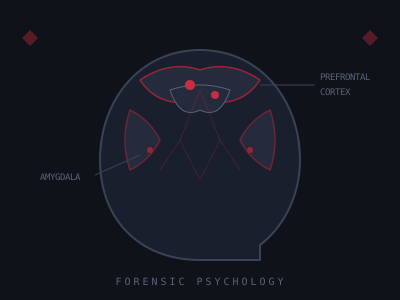
When we experience a life-threatening event, our brain activates survival systems that have evolved over millions of years. The amygdala, a small almond-shaped structure deep in the brain, serves as our alarm center. It detects danger and triggers the fight, flight, or freeze response before our conscious mind can even process what is happening.
During a traumatic event, stress hormones flood the body. Cortisol and adrenaline prepare us to survive. Heart rate increases. Muscles tense. Blood flow shifts away from digestion and toward the limbs. The prefrontal cortex, responsible for rational thinking and planning, goes partially offline. Survival takes priority over everything else.
For most people, these systems return to normal after the danger passes. The body calms down. The rational brain comes back online. Life continues.
For some survivors, however, the alarm system remains activated long after the threat has ended. This is the foundation of trauma-related disorders like Post-Traumatic Stress Disorder (PTSD).
Common Trauma Responses
Trauma responses vary from person to person, but several patterns appear frequently among survivors of violent crime.
Hypervigilance
Your nervous system may remain on high alert, constantly scanning for threats. You might find yourself unable to relax in public spaces. You might sit with your back to the wall in restaurants. You might check locks multiple times before bed. This heightened awareness was useful during the threat. Now it exhausts you.
Intrusive Memories
Unwanted memories of the event may appear without warning. These can be visual flashbacks, sounds, smells, or physical sensations. You might feel as though you are reliving the trauma rather than simply remembering it. These intrusions are not signs of weakness. They are your brain’s attempt to process an overwhelming experience.
Avoidance
You may find yourself avoiding places, people, or activities that remind you of the trauma. This avoidance makes sense as a protective mechanism. The problem is that excessive avoidance can shrink your world and prevent healing. Finding the balance between self-protection and gradual exposure is part of recovery.
Emotional Numbing
Some survivors report feeling emotionally flat or disconnected. Activities that once brought joy feel meaningless. Relationships feel distant. This numbness is another survival adaptation. Your brain may be protecting you from overwhelming emotions by limiting your capacity to feel anything at all.
Physical Symptoms
Trauma lives in the body as well as the mind. Survivors often report chronic pain, digestive problems, headaches, and fatigue. Sleep disturbances are extremely common. Your body remembers the trauma even when your conscious mind tries to forget.
Why Responses Vary
Not everyone who experiences violent crime develops lasting trauma symptoms. Research has identified several factors that influence how individuals respond.
Previous trauma history plays a role. Those who experienced childhood adversity may be more vulnerable to adult trauma. Conversely, some individuals develop resilience through successfully navigating earlier challenges.
Social support matters enormously. Survivors with strong connections to family, friends, or community tend to recover more quickly than those who face their experience alone. Isolation compounds trauma.
The nature of the crime itself influences outcomes. Crimes involving betrayal by someone trusted, prolonged terror, or extreme helplessness often produce more severe symptoms than single incidents by strangers.
Individual neurobiology varies. Some people have nervous systems that return to baseline more easily than others. This is not a character flaw. It is simply biological variation.
The Path to Healing
Recovery from trauma is possible. The brain has remarkable capacity for change, a property scientists call neuroplasticity. With appropriate support and treatment, survivors can reduce symptoms and rebuild their lives.
Professional treatment helps many survivors. Trauma-focused therapies like EMDR (Eye Movement Desensitization and Reprocessing) and trauma-focused cognitive behavioral therapy have strong research support. These approaches help the brain process traumatic memories and reduce their emotional charge.
Medication can provide relief for some symptoms. Antidepressants may help with depression and anxiety. Sleep medications can restore rest. These are tools to support recovery, not signs of failure.
Self-care practices make a difference. Regular exercise helps regulate the nervous system. Mindfulness practices can increase awareness of trauma responses without being overwhelmed by them. Creative expression through art, music, or writing allows some survivors to process experiences that resist verbal description.
Connection with others aids healing. Support groups allow survivors to share experiences with people who truly understand. Relationships with trusted friends and family provide the safety that trauma disrupted.
What Not to Do
Well-meaning people sometimes give advice that can harm rather than help. Survivors do not benefit from being told to “get over it” or “move on.” Trauma does not respond to willpower alone.
Substance use may seem to provide temporary relief but ultimately makes symptoms worse. Alcohol disrupts sleep. Drugs interfere with emotional processing. Self-medication delays genuine recovery.
Complete avoidance prevents healing. While some protective measures make sense, hiding from all reminders of trauma keeps the wound fresh. Gradual, supported exposure to triggers helps the brain learn that the danger has passed.
A Message for Survivors
If you are struggling after violent crime, please know that you are not broken. Your responses make sense in light of what happened to you. The symptoms that trouble you are evidence that your survival systems work. The goal of recovery is not to forget what happened but to integrate it into your life story in a way that allows you to move forward.
You do not have to face this alone. Help is available. Recovery is possible. Many survivors find that working through trauma eventually leads to unexpected growth: deeper relationships, clearer priorities, and a richer appreciation for life.
The darkness of trauma is real. So is the possibility of light.
Written by Jenny Montoya M.A. Forensic Psychology
If you are experiencing a mental health crisis, please call or text 988 for the Suicide and Crisis Lifeline. You deserve support.